
SM-65 Atlas Inter-Continental Ballistic Missile System 1956-1965
General Electric Corporation
Mark 2 Re-Entry Vehicle for Atlas A/B/C
The General Electric Mark 2 (Mk 2) re-entry vehicle was a pioneering heat-sink type RV developed in 1955 for early U.S. ballistic missiles. It was designed to carry nuclear warheads and protect them during atmospheric re-entry by absorbing and deflecting extreme heat generated at hypersonic speeds. This made it the only operational heat-sink RV deployed by the United States.
Design and Technology
The Mk 2 featured a blunt-body shape, resembling a flattened cone, which created a shockwave to deflect much of the re-entry heat away from the vehicle. Any residual heat was absorbed by a thick copper heat sink beneath the outer shell, preventing the surface from melting. The nose was made of copper, while the body used stainless steel. It had a low ballistic coefficient (beta), meaning it decelerated gradually in the upper atmosphere, experiencing lower peak temperatures over a longer period compared to sleeker designs. Dimensions were approximately 5 feet in diameter and height, with a weight of around 1,800 pounds.
Historical Development and Use
Work on the Mk 2 began at General Electric's Re-entry Systems division in 1955, based on research into blunt-body aerodynamics to solve re-entry challenges. It predated the first flight of the Atlas ICBM in 1957 (Atlas 4A) and was operational by the late 1950s. This rv was primarily used on: Thor intermediate-range ballistic missiles (IRBMs), Early Atlas intercontinental ballistic missiles (ICBMs) and Jupiter IRBMs. It was deployed at sites like Vandenberg Air Force Base. Later variants included data capsules for research, such as an 18-inch sphere housed inside the RV to collect re-entry data. The Mk 2 influenced subsequent designs, paving the way for ablative RVs and multiple independently targetable re-entry vehicles (MIRVs) like the Mark 12A by the 1970s.
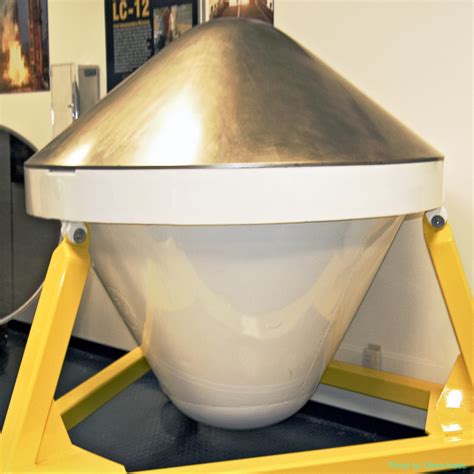
General Electric Mk 2 Re-Entry Vehicle
Mark 3 Re-Entry Vehicle for Atlas D
The General Electric Mark 3 (Mk 3) reentry vehicle was a pioneering ablative reentry system developed by General Electric's Re-entry Systems division for the United States Air Force (USAF) in the late 1950s and early 1960s. It served as the warhead delivery component for the Atlas intercontinental ballistic missile (ICBM), marking a significant advancement in reentry technology during the early Cold War era. The Mk 3 was the first operational reentry vehicle to incorporate ablative materials for heat shielding, enabling it to withstand the extreme temperatures of atmospheric reentry while achieving intercontinental ranges.
Development History
The Mk 3 evolved from earlier experimental programs, such as the RVX-1 and RVX-2 reentry vehicles, which tested ablative heat shield concepts. General Electric drew heavily on the RVX-1's geometry for the Mk 3 design. Development focused on improving ballistic coefficients (beta, a measure of weight, drag, and cross-section) to create lighter, faster vehicles that could penetrate deeper into the atmosphere before decelerating, reducing vulnerability to interception. Contracts for advanced ablative testing were awarded to General Electric and competitors like Avco in 1959-1960. The Mk 3 underwent 11 test flights aboard Atlas D missiles between March 1960 and January 1961, with one failure due to a launcher issue before liftoff. Its success led to operational deployment from 1960 to 1965, including the longest ICBM reentry flight at the time (Approximately 9,000 miles on Atlas 56D ).
Technical Features
Shape and Structure: The vehicle featured a spherical-conical nose cone, a cylindrical mid-body, and a large flared base for aerodynamic stability during reentry. This design provided a higher beta than earlier blunt-body vehicles, allowing faster descent with less drag. Heat Shielding: Covered entirely in phenolic nylon (an ablative plastic) to protect against reentry heat by vaporizing and carrying away thermal energy. This was a key innovation over metal heat sinks used in prior designs. Dimensions: Approximately 3 meters (about 10 feet) long and 0.9 to 1 meter (3 to 3.3 feet) in diameter. Variants: Included models like Mod I, Mod IX, Mod 1A (with a single bi-conic flare), and Mod IB/Mod IIB (with a double flare for varied stability testing). Payload: Typically carried a single nuclear warhead, such as the W-38 thermonuclear device with a yield of around 3.75 megatons, though specifics varied by mission. The Mk 3 was not equipped with multiple independently targetable reentry vehicles (MIRVs), a feature that emerged later in systems like the Minuteman III's Mk 12.
Operational Use and Significance
Deployed primarily on the Atlas ICBM, the Mk 3 represented the U.S.'s first truly intercontinental reentry capability, enhancing nuclear deterrence by enabling strikes on distant targets. It influenced subsequent designs, such as the larger Mk 6 for the Titan II (over 10 feet long and 7.5 feet wide at the base) and the pointed-cone Mk 12 for the Minuteman, which became standard for modern ICBM warheads. The vehicle's ablative technology laid the groundwork for later reentry systems, including those used in space exploration and hypersonic weapons. By the mid-1960s, it was phased out in favor of more advanced MIRV-capable re-entry vehicles.
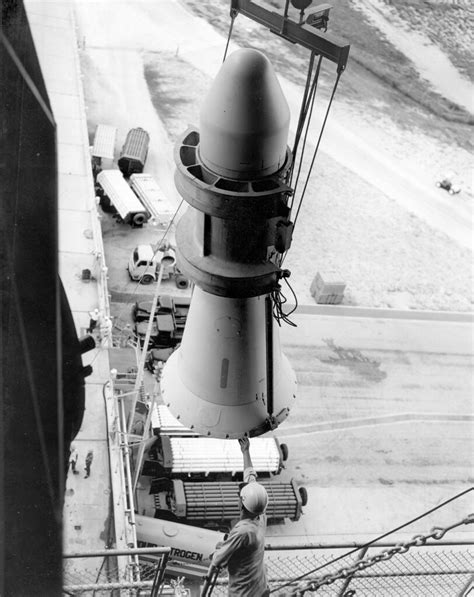
General Electric Mk 3 Re-Entry Vehicle
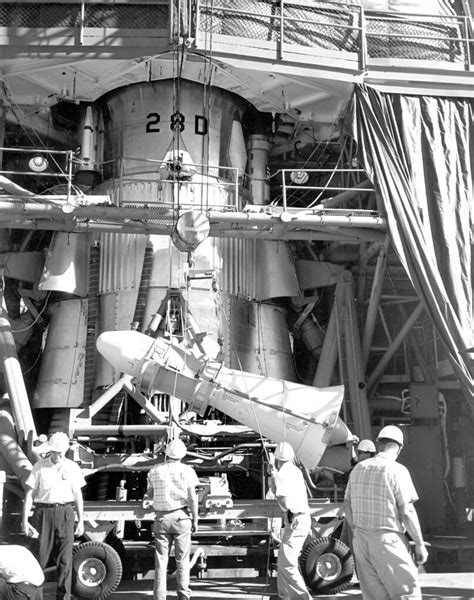
General Electric Mk 3 RV Being Installed on Atlas 28D
Home » Missiles » Squadrons » Documents » Photos » Videos » Sitemap » Search » What's New
Copyright © 2001- All Things Atlas Historical Center, Inc. All Rights Reserved.
